
Why You Might Be Sleeping… But Still Feeling Tired..

Sleep quality refers to how restful and uninterrupted your sleep is - not just how many hours you spend in bed. If sleep cycles are disrupted by factors such as snoring, stress, lifestyle habits, or sleep apnoea, you may still feel tired even after a full night’s sleep. Improving sleep quality starts with identifying the cause of disrupted sleep.
Most people know that getting enough sleep is important for overall health. What many people don’t realise is that sleep quality matters just as much as the number of hours you spend in bed. Even if you’re spending seven or eight hours asleep, poor-quality sleep can leave you feeling tired, unfocused, or irritable the next day.
Good quality sleep helps:
Reduce stress
Improve concentration and memory
Support immune health
Maintain energy levels throughout the day
Reduce the risk of long-term health problems
If you often wake up feeling unrefreshed, there may be something affecting how well you sleep.
What Happens When You Sleep?
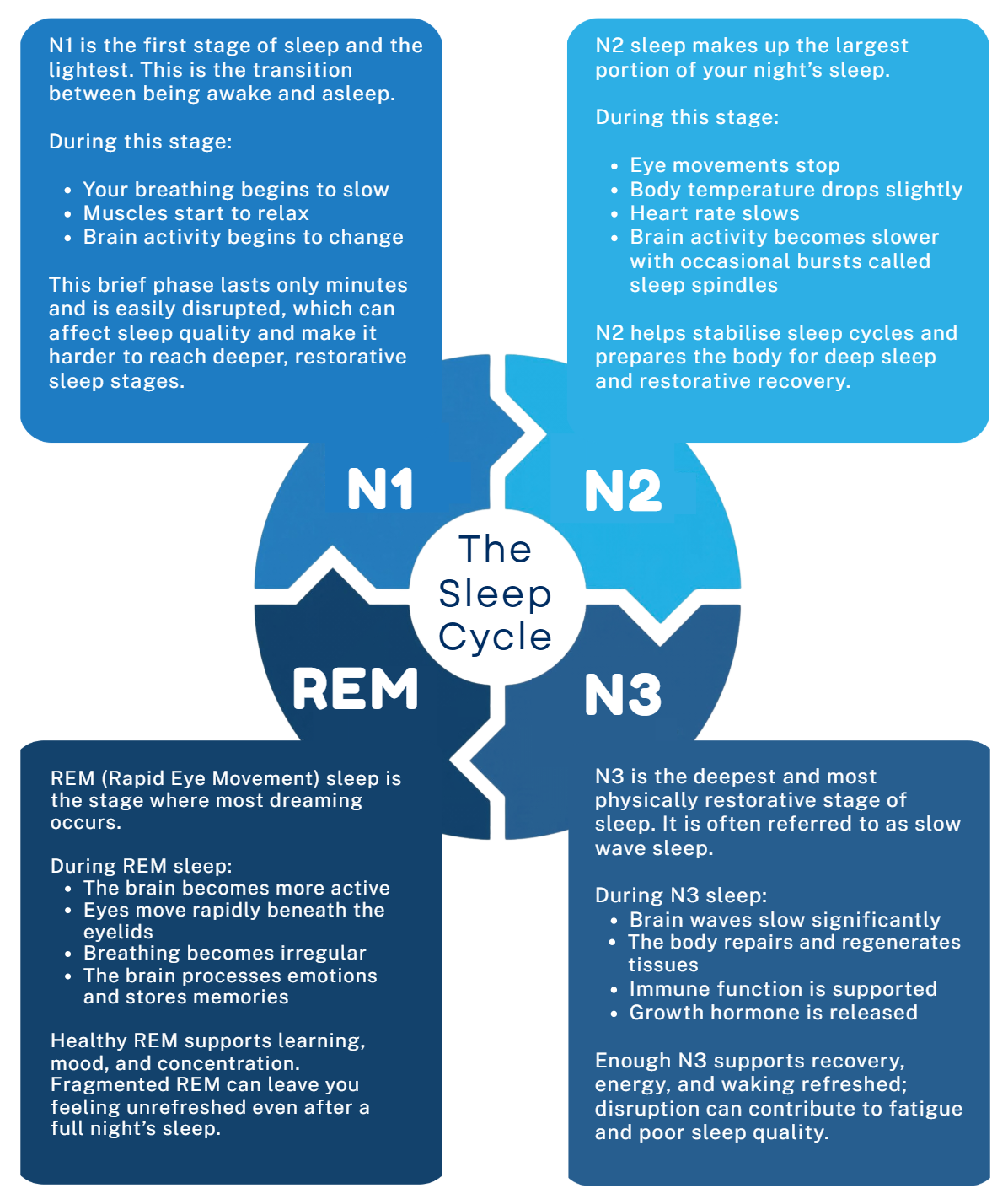
Sleep is not one continuous state. During the night your body moves through several stages of sleep, each playing an important role in recovery, memory and overall health.These stages form a sleep cycle as shown above, which repeats throughout the night. A typical cycle lasts around 90 minutes, and most people experience four to six cycles per night.When sleep cycles are repeatedly interrupted - for example by snoring or sleep apnoea - the body may struggle to reach or maintain these deeper stages of sleep. This can leave a person feeling tired even after spending many hours in bed.
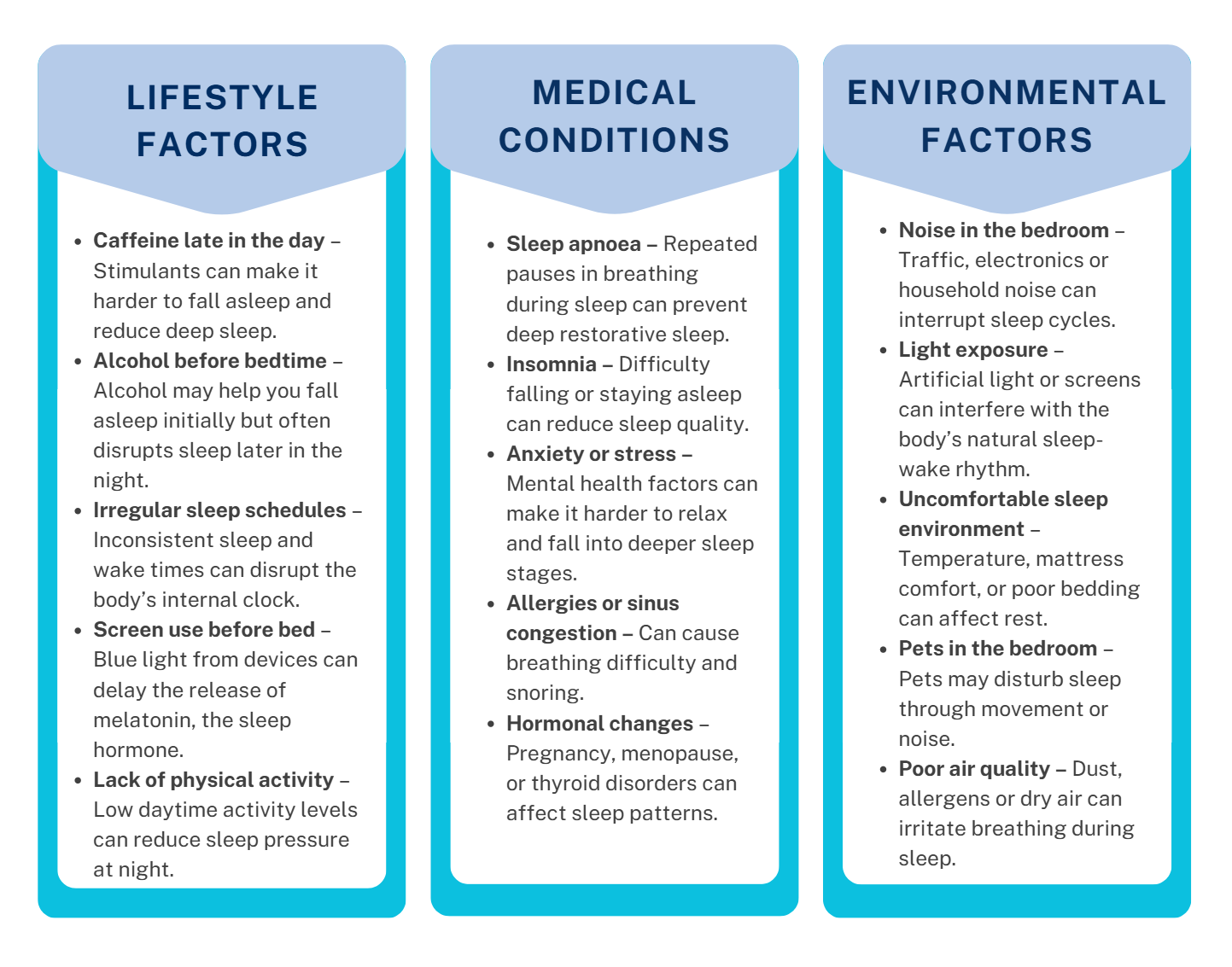
Common Causes of Poor Sleep Quality
Many factors can influence sleep quality, and the list below is not exhaustive. The most helpful first step is working out what’s interrupting your sleep so you can address it effectively.
Could Sleep Apnoea Be Affecting Your Sleep?
One of the most common causes of poor sleep quality is obstructive sleep apnoea (OSA).Sleep apnoea occurs when the airway repeatedly narrows or collapses during sleep, briefly interrupting breathing and reducing oxygen levels. These interruptions can happen many times throughout the night.Common symptoms include:
Loud or frequent snoring
Waking feeling tired
Daytime fatigue
Morning headaches
Difficulty concentrating
If these symptoms sound familiar, you can start by taking the SleepWise Free Snoring & Sleep Apnoea Test a quick screening tool that helps assess your risk for sleep apnoea. The only way to confirm a diagnosis is with a sleep study, which measures breathing and oxygen levels during sleep. Click on this link to read our SleepWise Sleep Better hub blog article on sleep studies and diagnosis.
Treatment Options for Snoring and Sleep Apnoea
If sleep apnoea is diagnosed, treatment will depend on the severity and individual circumstances. For many patients with snoring, mild sleep apnoea or moderate sleep apnoea, a custom oral appliance can be an effective and comfortable treatment. These appliances gently reposition the lower jaw during sleep to help keep the airway open and reduce snoring. Learn more about how oral appliances work for sleep apnoea and treatment options for snoring on the SleepWise website. SleepWise Clinic's Sleep Medicine Dentists are accredited by the Australasian Sleep Associationand work closely with GPs, ENT surgeons and sleep physicians to ensure patients receive evidence-based care.
Signs Your Sleep May Need Attention
You may want to investigate your sleep further if you:
Take longer than 20 minutes to fall asleep
Wake frequently during the night
Snore loudly
Wake feeling unrefreshed
Experience daytime fatigue or brain fog
These symptoms , among others, may indicate poor sleep quality or an underlying sleep disorder. Read more about sleep apnoea and alternatives to CPAP therapy.
Better Sleep Starts With Understanding the Cause
Sleep is essential for both physical and mental wellbeing. When sleep quality is poor, it can affect everything from mood and energy levels to long-term health. If you are experiencing snoring, fatigue, or disrupted sleep, it may be worth exploring the cause. You can start by completing the 2 minute SleepWise Free Snoring & Sleep Anoea Test to assess your risk for sleep apnoea. Better sleep often begins with a clearer understanding of what is happening during the night.